
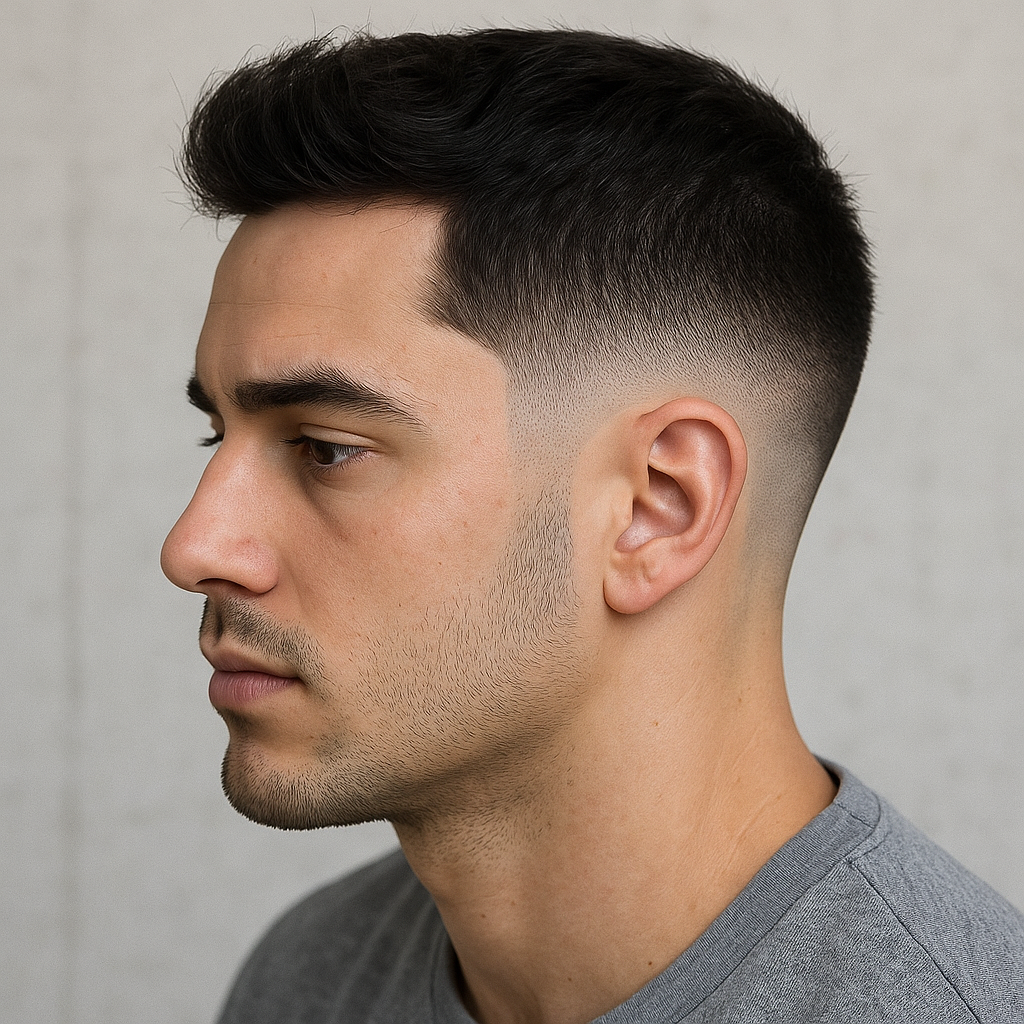
What Is a Low Taper Fade?
A low taper fade is a clean, subtle gradient that starts low on the head—right around the top of the ear and the nape—then gradually blends into the hair above. Unlike dramatic high fades, this version keeps bulk and length higher up while polishing the edges. Think of it as the haircut equivalent of tailoring your sleeves and hem without altering the entire suit: sharp where it counts, conservative where it matters.
Taper vs. Fade vs. Low Taper Fade
-
Taper: Hair progressively shortens only at key points (sideburns and neckline), leaving the sides mostly intact.
-
Fade: Hair transitions from very short (often skin) to longer, across a broader area of the sides and back.
-
Low taper fade: A hybrid feel—focused tapering at the low zones (temples/sideburns and nape) plus a subtle fade that hugs the perimeter. Result: crisp outline, softer sides, and tons of versatility on top.
Why the “Low” Placement Matters
The low placement preserves fullness around the parietal ridge (the widest part of your head), which:
-
Flatters more face shapes
-
Looks professional for office settings
-
Pairs well with curls, waves, or longer styles on top
Who Should Get a Low Taper Fade?
Short answer: nearly everyone. Long answer: it’s especially good if you want polish without going ultra‑short on the sides.
Face Shapes
Round, Oval, Square, Diamond
-
Round: Keep more height on top and a tight low taper to elongate the face.
-
Oval: You can wear almost any variation; a low taper simply adds neat edges.
-
Square: A low taper softens strong jawlines while preserving structure.
-
Diamond: Keep fullness at the temples with a careful, not overly aggressive taper.
Hair Types & Textures
Straight, Wavy, Curly, Coily
-
Straight: A low taper prevents that “helmet” look and adds dimension.
-
Wavy: Enhances natural movement; light layering on top + taper at the edges pops.
-
Curly: Keeps curls the star of the show while the edges stay sharp.
-
Coily: A low temple and nape taper (often called a temple/afro taper) looks crisp and intentional.
Lifestyle & Dress Codes
If you need to look sharp for work but still want style on weekends, the low taper fade is the sweet spot. It doesn’t scream “barbershop experiment,” but it still feels modern.
Popular Low Taper Fade Variations
Low Taper with Curls
Let your curls sit naturally on top, add a low taper at the edges, and finish with a curl cream or leave‑in to define without crunch.
Low Taper with Fringe/Comb Over
Prefer a fringe? Keep it textured and piecey. If you like side‑part structure, a comb over pairs perfectly with the clean edges of a low taper.
Quiff or Pompadour + Low Taper
Lift up front, taper the edges low, and you get classic-meets-contemporary. Use a medium hold mousse or volumizing spray, then a light matte product to lock it in.
Afro Low Taper/Temple Taper
Maintain shape and fullness in your afro while tapering temples and nape. This keeps the silhouette sharp and the overall cut intentional.
Burst & Drop Interpretations
A burst effect concentrates the taper around the ear, while a drop follows the head’s curvature lower in the back. Both can be done subtly at a low height to preserve the low taper identity.
How to Ask Your Barber (Use This Script)
Length and Guard Numbers
“I’m looking for a low taper fade. Keep the taper low at the sideburns and nape. On the sides above the taper, leave [# guard]—maybe a #3—and keep some bulk around the ridge. On top, leave [length you want].”
Taper Placement: Sideburns & Nape
“Please start the taper just above the ear and low on the neck, not high.” Be clear that you don’t want the fade to creep up.
Hairline, Line‑Up & Beard Integration
“Clean, natural hairline with a soft line‑up, and blend the taper into my beard at the sideburns. Keep the neckline squared (or rounded) to match my style.”
Barber Step‑by‑Step Cutting Guide
(Great for barbers—and for clients who like to understand the process.)
Tools You’ll Need
-
Clippers with guards (#0.5 to #4)
-
Trimmers/edgers for detailing
-
Scissors & thinning shears
-
Comb, sectioning clips
-
Neck strip, cape, brush, blow‑dryer
Sectioning & Baseline
-
Drape the client; sanitize tools.
-
Create a baseline on top (cut to desired length or leave for later).
-
Define your horseshoe parting to separate the top from the sides.
Create the Low Guideline
-
With trimmers, sketch your low taper starting point at the sideburns and nape.
-
Keep this guideline tight and low—this is what keeps the taper subtle.
Blend with Guards & Over‑Comb
-
Use a #0.5 or #1 to start the blend from the guideline upward.
-
Move to #1.5/#2 as you climb, maintaining a short-to-long rhythm.
-
Use clipper‑over‑comb around the ridge to keep weight and avoid a “hole.”
-
Check symmetry between both sides constantly.
Detail the Neckline & Temples
-
Tidy around the ears and nape with trimmers.
-
Decide on square vs. rounded neckline based on head shape and style.
-
Use a light line‑up if requested—crisp, but avoid digging into the hairline.
Scissor Work on Top
-
Point‑cut to add texture.
-
Keep weight where the head needs it (flat spots, cowlick areas).
-
For quiffs/pomps, maintain front length for lift.
Finish & Style
-
Blow‑dry in direction of the final style.
-
Add product (matte for texture, light shine for classic looks).
-
Do a final pass for missed weight lines under good lighting.
DIY: Doing a Low Taper Fade at Home (If You Must)
Professionals will always do it better, but if you’re set on trying:
Prep & Safety
-
Good lighting and patience are mandatory.
-
Clean, dry hair shows weight lines best.
-
Disinfect tools and keep guard attachments secure.
Mirror Setup & Angles
-
Use a three‑mirror setup so you can see the back.
-
Tilt your head slightly and work in small sections.
Simplified Step Sequence
-
Map your low guideline at sideburns and nape with the trimmer.
-
Use a #0.5 → #1 → #1.5 → #2 to build a smooth gradient.
-
Keep the blend low; do not chase imperfections upward.
-
Light clipper‑over‑comb around the ridge, or leave it to a pro.
-
Edge up slowly around ears and nape—less is more.
Common Mistakes to Avoid
-
Raising the fade to “fix” lines (you’ll end up with a mid/high fade).
-
Uneven guards or rushing—double‑check attachments.
-
Carving the hairline too far back; it won’t grow back overnight.
Styling Ideas & Product Picks
(General guidance—choose what fits your hair and scalp.)
Matte vs. Shine
-
Matte clays/pastes = textured, modern, lived‑in.
-
Creams & light pomades = smoother, classic, a touch of sheen.
Short Textured Looks
-
Towel‑dry, apply a pea‑size matte paste, rake and scrunch.
-
Finish with a light mist of hairspray for hold without crunch.
Waves & Curls
-
Apply a curl cream or leave‑in to damp hair.
-
Diffuse on low heat; avoid over‑drying to prevent frizz.
Longer Styles & Heat Tools
-
Use a heat protectant.
-
Blow‑dry up and back for quiffs/pomps; finish with a light pomade or paste.
Maintenance & Aftercare
How Often to Get a Touch‑Up
-
Every 2–3 weeks to keep the taper crisp.
-
If your hair grows slowly or you like softer edges, 3–4 weeks can work.
At‑Home Upkeep Between Cuts
-
Clean the neckline and stray sideburn hairs with a trimmer once a week.
-
A dab of product + quick blow‑dry refreshes shape in 60 seconds.
Scalp and Hair Health
-
Wash 2–4 times per week depending on oiliness; co‑wash curls as needed.
-
Use a lightweight conditioner; avoid heavy buildup near the taper.
Low Taper Fade by Hair Length
Short on Top
Crisp, athletic, and low‑maintenance. Texture on top stops it from looking flat.
Medium on Top
The “Goldilocks” zone: enough hair to style, not enough to struggle. Ideal for comb overs, messy crops, and mini quiffs.
Long on Top
Statement territory. Keep the taper low and neat so the length on top becomes the hero. Great for waves, curls, and dramatic lifts.
Matching the Fade to Your Beard
Tapered Beard Flow
Fade your sideburn into your beard so there’s no harsh jump from skin to bulk. It draws the eye smoothly from hair to face.
Stubble/Goatee Integration
If you wear stubble or a goatee, keep sideburns short and clean. A slight taper into stubble looks intentional, not accidental.
Costs, Time & Etiquette
How Long the Service Takes
-
Expect 30–45 minutes for a solid low taper fade; longer if significant scissor work or styling is involved.
Tipping & Booking Tips
-
Tip according to local norms.
-
Book follow‑ups in advance, especially on weekends.
Using Photos & References
Bring 2–3 reference photos of similar hair type and head shape. Say what you like about each image (e.g., “keep the taper this low,” “I want this amount of top length”).
Inspiration: Professional vs. Casual Low Tapers
Clean Corporate
Low taper + medium length on top, side‑part combed neatly. Minimal product, controlled shine, razor‑sharp nape.
Sporty Weekender
Low taper + textured crop or curls. Matte finish or defined curls, natural hairline for an easygoing vibe.
Troubleshooting & Quick Fixes
Visible Lines or “Steps”
Ask your barber to revisit with an intermediate guard (#0.5, #1.5) and clipper‑over‑comb to erase the shelf.
Fade Too High or Patchy
You can’t add hair back; the fix is blending above or allowing two weeks of growth before re‑tapering low again.
Cowlicks & Swirls
Don’t fight them; cut with the grain, use a lightweight product, and blow‑dry in the swirl’s direction to settle it.
Receding Hairlines
Keep the taper clean but avoid overly sharp line‑ups that highlight recession. Opt for a softer edge and a bit more top length.
Low Taper Fade vs. Other Cuts
Mid Taper Fade
Starts higher around the temple; more dramatic slimming of the sides. Great if you want a punchier look, but it’s less conservative.
Skin (Bald) Fade
Fades to skin at the bottom. A low skin taper is possible, but it reads sharper and higher‑contrast than a classic low taper.
Drop Fade
The fade “drops” behind the ear toward the occipital bone. You can do a low drop for a curvy, sculpted silhouette.
Undercut
No taper or fade, just a stark disconnect. If you love contrast, go for it; if you want subtlety, low taper wins.
Conclusion
A low taper fade is the haircut that quietly does everything right: it sharpens your edges, respects your hair’s natural shape, and leaves room for personality on top. Whether you wear waves, curls, a comb over, or a messy crop, the low placement keeps things professional for Monday and stylish for Saturday. Communicate clearly with your barber, keep the taper low, and maintain it with simple at‑home touch‑ups. Do that, and you’ve got a cut that’s clean today and still looks intentional three weeks from now.
FAQs About Low Taper Fade
How often should I get a low taper fade touched up?
Every 2–3 weeks keeps it sharp; every 3–4 if you like softer edges or your hair grows slowly.
Is a low taper fade good for thin or fine hair?
Yes. Keeping the taper low preserves fullness on the sides. Ask your barber to avoid over‑removing weight around the ridge.
Can I combine a low taper with a skin finish at the very bottom?
Absolutely. That’s a low skin taper—just note it reads sharper and higher‑contrast than a classic low taper.
What products work best with a low taper fade?
For texture: matte paste or clay. For a classic look: light cream or pomade. For curls: curl cream/leave‑in and a diffuser.
What’s the biggest mistake people make with low tapers?
Chasing imperfections higher and higher, turning a low taper into a mid/high fade. Keep corrections low and subtle.