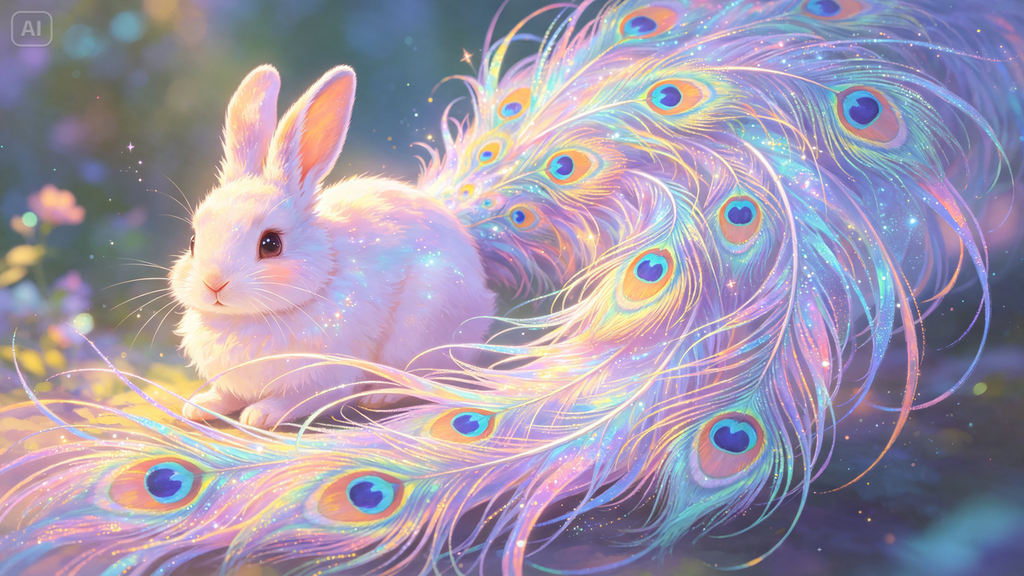
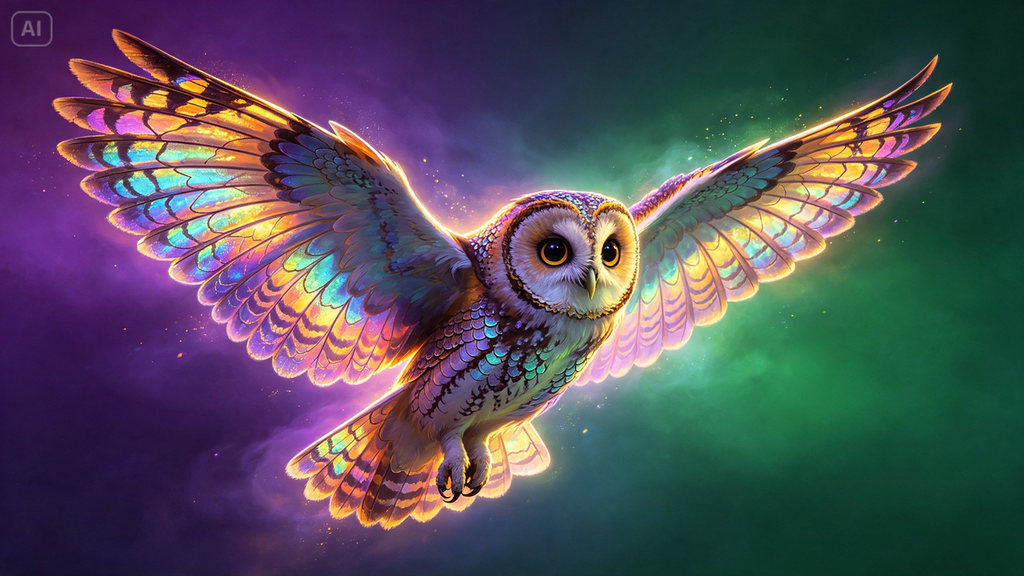
A dog with the shimmering scales of a fish, an owl with butterfly wings instead of feathers, a rabbit with a peacock’s dramatic tail- animal mashups occupy this wonderfully strange space between believable and impossible that consistently performs well across social feeds. An AI image generator makes building these hybrid creatures genuinely approachable, blending two familiar animals into something entirely new.
Dreamina, running on its advanced image models like Seedream 5.0 Pro, GPT Image 2, and Nano Banana, handles this kind of creature-blending work with real anatomical thoughtfulness. Here’s how to design a mashup that actually looks intentional rather than randomly assembled.
Why some animal combinations work better than others
The most successful mashups tend to pair animals that share some structural or thematic logic, a similar size, a complementary color story, or a shared habitat theme, rather than combining two completely unrelated creatures at random. A fox and a fish share an elegant, sleek quality that makes their combination feel deliberate rather than arbitrary.
Deciding which animal contributes what
A clean, effective mashup usually has one animal providing the base body and structure, while the second animal contributes specific standout features:
- The base animal defines overall body shape, posture, and size
- The second animal contributes surface texture, scales, feathers, fur pattern
- One or two signature features borrowed directly, wings, a tail, ears
- A consistent color palette tying both halves together visually
Your 3-step creature blend with Dreamina
Step 1: Write a text prompt
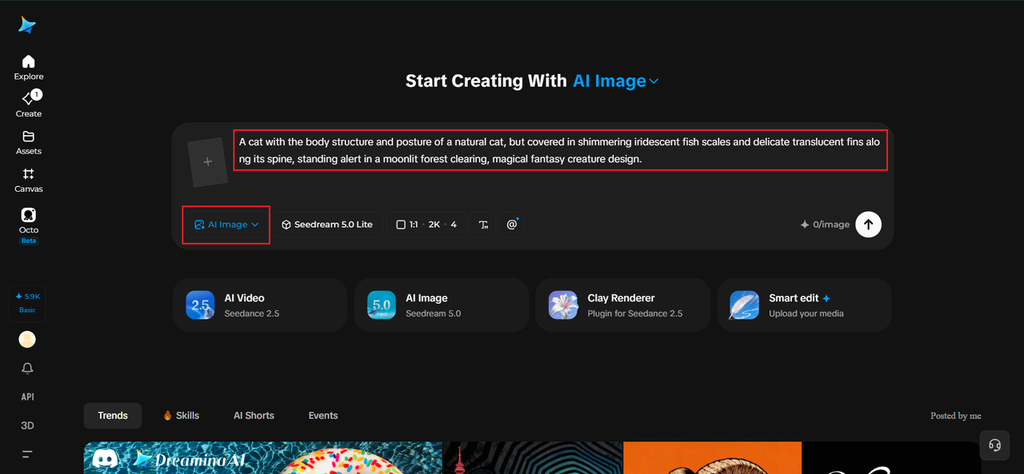
Navigate to Dreamina and write a detailed text prompt describing your chosen base animal combined with specific features borrowed from a second animal, keeping the overall body structure clear and the added features well-defined. If you have reference images of both source animals, upload them to help guide the blend accurately.
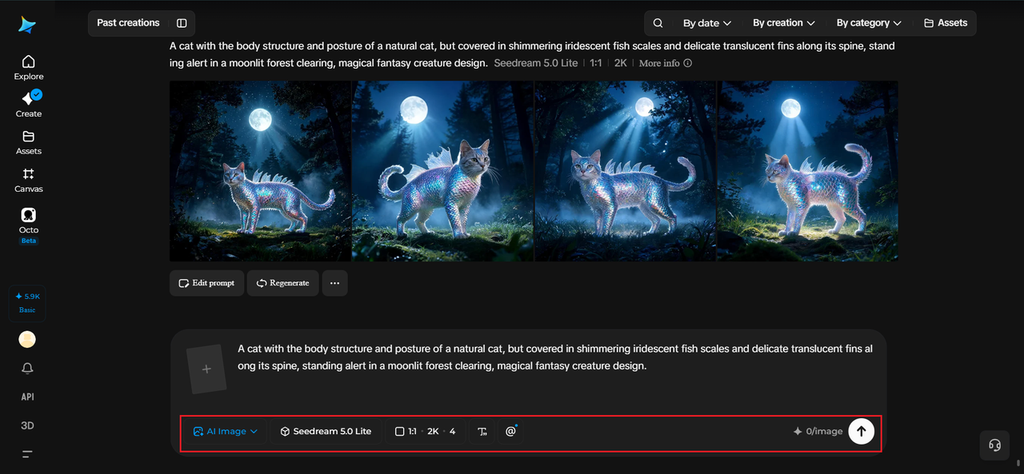
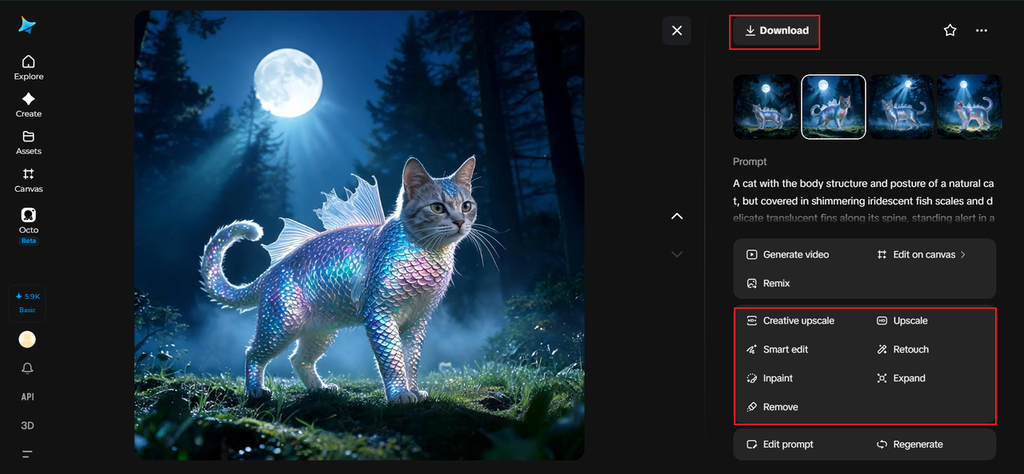
A sample prompt might read: A cat with the body structure and posture of a natural cat, but covered in shimmering iridescent fish scales and delicate translucent fins along its spine, standing alert in a moonlit forest clearing, magical fantasy creature design.
Naming exactly which features come from which animal keeps the final result coherent rather than chaotic.
Step 2: Adjust parameters and generate
Before generating, set your parameters. Choose Image 5.0 Pro, powered by Seedream 5.0 Pro, as your model, then select your aspect ratio, image size, and resolution, using a portrait ratio to keep focus on the creature and 2K resolution to preserve fine scale, fur, or feather texture. Click Dreamina’s generate icon to bring your creature to life.
Step 3: Customize and download
Once your creature generates, refine it using Dreamina’s AI customization tools — inpaint to adjust how the two animal features blend, expand to reveal more of the surrounding setting, remove to eliminate anything that feels disconnected, and retouch to balance texture and lighting across the whole creature. When the mashup feels genuinely cohesive, click the Download icon to save it.
Meet Seedream 5.0 Pro: precision for creature design
A handful of Seedream 5.0 Pro’s specific capabilities make this kind of hybrid creature work genuinely reliable.
Deep reasoning generation for anatomical coherence
Deep reasoning generation analyzes your prompt’s relationships before generating, helping the blended features attach and flow believably across the creature’s body.
Pinpoint precision editing for feature blending
With point selection, lasso, sketch guidance, and regional controls, pinpoint precision editing lets you fine-tune exactly how one animal’s texture transitions into the other’s.
Multi-layer visual control for background flexibility
Multi-layer visual control separates the creature from its environment, making it easy to place the same design into different settings without redoing the whole creature.
2K output for realistic texture blending
Since the mashup’s believability depends on convincing texture transitions, 2K output quality preserves that fine detail clearly.
Choosing a habitat that suits the hybrid
The setting behind your creature should make sense for both source animals, or lean into whichever half dominates the design. A fox-fish hybrid might suit a misty, water-adjacent forest, while a bird-mammal combination might suit a dramatic cliffside or open sky setting.
Building a whole mashup menagerie
Once one combination feels successful, it’s a natural next step to design several more using a consistent approach, always pairing a clear base animal with specific borrowed features from another. A themed set, several forest creatures blended with aquatic features, for instance, creates a genuinely cohesive creative series.
Testing unexpected pairings
Some of the most memorable mashups come from combinations that seem unlikely on paper, a hedgehog with hummingbird wings, a turtle with butterfly-patterned shell markings. Experimenting with a few genuinely surprising pairings, rather than only safe, obvious ones, often produces the most shareable results.
Common mistakes worth avoiding
A few habits tend to weaken an otherwise interesting mashup concept:
- Blending too many source animals into one confusing design
- Ignoring proportion, resulting in features that don’t fit the base body naturally
- A color palette pulling in visually conflicting directions
- Losing what made either original animal charming in the first place
Final thoughts
Two familiar animals can combine into something genuinely new and shareable, as long as the blend feels intentional rather than random, and the right AI image generator makes that intentional design achievable.
With Dreamina and its advanced models, hybrid creatures come together with real anatomical believability and charm.
Choose your pairing thoughtfully, decide what each animal contributes, and let Dreamina bring your next viral creature concept to life.